The BluWine is a four-year international research and training initiative bringing together 63 researchers, including 13 Early-Stage Researchers (ESRs) and 50 Experienced Researchers (ERs).
The programme is structured into 9 work packages (WP), covering research, training, dissemination, and project management. Research activities focus on sustainable innovations in viticulture and winemaking, including alternatives to chemical treatments, reduction of ethanol and CO₂ emissions, water optimization and recycling, valorisation of winery by-products, and the development of smart technologies for wine quality control. The project also evaluates the environmental and economic impacts of these innovations through life cycle assessment.
To strengthen capacity building and knowledge transfer, BluWine aims to implement 77 international secondments, corresponding to 140 months of staff exchanges, providing participants with hands-on training in an interdisciplinary and international environment while fostering collaboration across academia and industry.
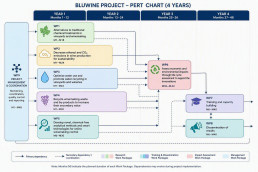
WP1 – “Exploitation of strategies for limiting the use of chemicals” will address approaches to constraint an overall chemical use by developing approaches at both vineyard and winery levels. Led by UMIL.
WP2 – “Decrease the production of carbon dioxide and ethanol during winemaking” will focus on fermentative and technological approaches for the production of low-alcohol wine applied for limiting the release and improving the recovery of carbon dioxide, and producing wine with low-alcohol content. Led by UNITO.
WP3 – “Integrative approach for the water management in the wine production chain” will develop strategies limiting the use of water for grapevine irrigation and winery cleaning and generating clean water that can be newly used. Led by HGU.
WP4 – “Re-utilisation of winemaking wastes: innovative strategies for products with added value” will address to recover the bioactive compounds, use grape marc (pomace) extracts in winemaking, take advantages of compounds in the grape marc and develop natural fertiliser and other novel products (i.e., flavoured beverages and foods). Led by UMIL.
WP5 – “Application of green analytical approaches for monitoring the wine production chain and the winemaking” will generate green analytical methodologies and equipment for both the control and the monitoring of the winemaking chain. Led by GROUPE ESA.
WP6 – “Analysis of economic and environmental impacts of innovative practices in the wine production chain” will evaluate the economic impact related to aspects of the wine industry by taking the opportunity to develop new advances in LCA tool. Led by GROUP ESA.
WP7 – “Training and transfer of knowledge” activities will increase skills for the staff involved in the BluWine project represents one of the expected impacts at the staff member level. At the same time, the training is among the objectives of the EU for increasing competitiveness and leadership for the research and innovation area. Led by UNITO. Led by UNITO.
WP8 – “Meeting and Conferences” will allow to share the results among Partners and with the scientific community and stakeholders, and divulge the achievements to experts and technicians of the wine field, and in general to the society. Led by UNITO
WP9 – “BluWine Management” will ensure effective coordination and management of the project and consortium, guaranteeing the implementation of the research and training project activities by providing structures, tools, and procedures for monitoring the progress of the work plan and the timely reporting to the REA. Lead by UMIL.